
Choosing hardwood flooring involves more than finding the right colour. Two similar-looking floors can differ in construction, response to moisture, resistance to everyday wear and maintenance needs. In an Ontario home, changing indoor conditions through the heating season and humid summer months also deserve attention. Start by establishing what suits the room and how your household uses it. With those practical requirements clear, you can compare species, finishes and design choices without letting appearance decide the entire project.
Start With the Room and Its Conditions
Room location and moisture conditions help determine suitable flooring options before you settle on a species, colour or plank style.
Compare Solid and Engineered Construction
The difference between solid and engineered wood flooring lies beneath the surface. Solid boards are one piece of wood throughout. Engineered flooring combines layers with a real-wood surface, so it belongs within the wood flooring category rather than being laminate. Its layered construction generally reduces expansion and contraction compared with solid boards, which can make it an option for below-grade rooms. That does not make it waterproof or suitable for every basement. Confirm that the selected product, subfloor conditions and proposed installation method are appropriate for the room before choosing either construction.
Account for Moisture and Seasonal Changes
Wood gains moisture and swells in humid conditions; it loses moisture and shrinks as conditions become drier. Indoor heating and seasonal humidity changes can therefore affect a floor, but outdoor weather alone does not establish conditions inside your home. Discuss moisture management before ordering, particularly for basements, concrete subfloors, radiant heating or intermittently heated rooms. These details can affect product selection and installation requirements. Follow the selected product’s guidance for indoor conditions, moisture testing and acclimatization rather than relying on a single humidity range or waiting period for every floor.
Match the Floor to Everyday Wear and Maintenance
Consider dent resistance, protection against surface wear, how noticeable that wear will be and the care your household can maintain.
Use Species Hardness to Assess Dent Resistance
Oak and hickory are generally harder than walnut and cherry, making species a useful consideration when comparing resistance to dents. Hardness describes how readily wood indents under pressure; it does not establish that a floor will resist scratches or moisture damage. For a household with pets and frequently moved dining chairs, separate those concerns. A harder species can address one priority, while furniture protection and finish selection address others. For engineered flooring, assess the complete product rather than treating the surface species’ hardness as a rating for the whole board.
Choose Finish and Sheen With Wear in Mind
A finish protects the wood against everyday wear, while sheen describes how much light the finished surface reflects. When comparing finish and sheen, lower-sheen options can make small scratches and normal wear less noticeable. They do not prevent that damage. Gloss alone is therefore a poor basis for judging protection. For hardwood floors in busy living areas, ask how the proposed finish is cleaned, maintained and renewed. Compare samples for appearance, then discuss the actual finish’s requirements so the look you prefer also fits the upkeep you can manage.
Understand Cleaning and Future Renewal
Check the floor’s care requirements: remove grit, clean spills promptly, use furniture pads and choose cleaners compatible with the finish. Avoid wet or steam mopping because moisture can damage both wood and finish. Future renewal also deserves attention. Recoating renews a compatible finish; sanding removes the existing finish and some wood. Whether sanding is possible depends on the usable wear layer and floor condition. Neither solid nor engineered construction comes with a fixed number of future refinishes.
Refine the Appearance Within Those Practical Limits
Once room suitability and household priorities have narrowed the options, compare how different boards and layouts would work with your interior.
Compare Grain, Variation, Plank Size and Pattern
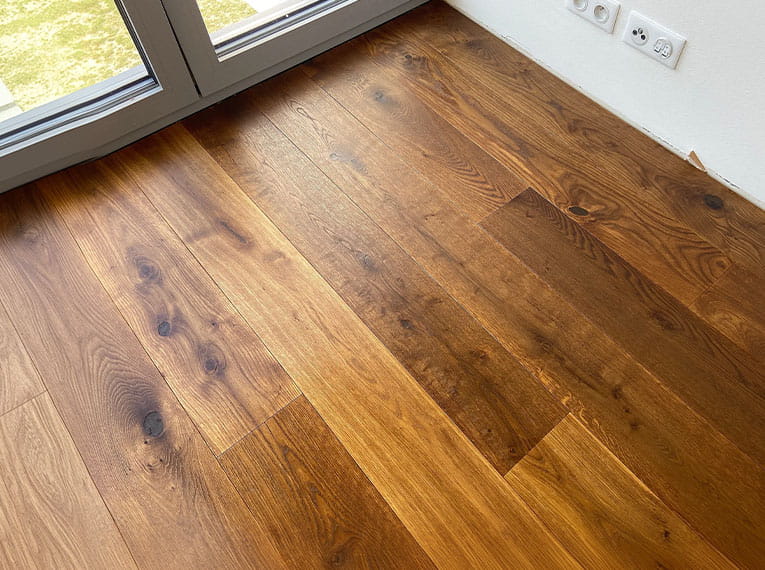
Species and natural character influence grain and variation, while board dimensions and layout shape the overall design. Wide planks and herringbone offer different ways to organize the floor visually, without either automatically making a room look larger. Compare several representative boards alongside cabinetry and other finishes, ideally under the lighting in the space. A small colour sample cannot show the full mix of grain and variation across an installed floor. Decide how much contrast and natural character you want before finalizing the selection.
Decide Whether Site Finishing Fits Your Project
Factory-finished flooring receives its colour and protective finish before installation. Site finishing involves finishing unfinished boards after they are installed, allowing colour and sheen to be coordinated on site. It also requires arrangements for finishing work and drying before the floor can be used. At Revival Flooring, we supply unfinished flooring rather than prefinished products. Through our flooring process, we can coordinate board dimensions, texture, colour and sheen. Discuss how that approach fits the renovation rather than assuming a particular completion or move-in date.
Compare the Complete Project Scope Before Committing
Material-only pricing and a proposal covering supply, installation and finishing describe different scopes. Before comparing totals, confirm what each quote includes for existing-floor removal, subfloor preparation, installation, finishing and transitions to adjacent flooring. Ask who is responsible for each part and which items are excluded. A clear breakdown helps you compare the same work across proposals rather than judging by the flooring material alone.
Room use and finishing arrangements also affect scheduling. Explain access restrictions, whether you will remain in the home and when rooms are needed. Ask when normal use can resume for the proposed finish.
Prepare these details for your enquiry:
- Room locations and approximate floor area.
- Known subfloor details and heating systems.
- Pets, household activity and expected traffic.
- Preferred appearance and relevant inspiration photographs.
- Working budget and preferred project timing.
Choose Hardwood Flooring That Fits Your Home and Daily Life
A useful shortlist balances room suitability, everyday wear and manageable upkeep before settling on the appearance. At Revival Flooring, our custom hardwood flooring options let us coordinate construction, species, board dimensions, texture, colour and sheen. Bring your practical priorities alongside your design preferences so we can discuss how those choices fit together for your home.
Share your room details, approximate area and inspiration photographs to start the conversation. You can request a project quote or call us at 705-990-0548 to discuss a custom flooring project and clarify the scope you need.
Frequently Asked Questions
Can Hardwood Flooring Be Used in a Basement?
Some engineered products can suit below-grade installation when moisture conditions, product approval and installation requirements are satisfied. Engineered construction does not resolve existing dampness. Have the basement and subfloor assessed, then confirm suitability for the specific product before including it in your flooring plans.
Does a Higher Wood Grade Mean a More Durable Floor?
No. Wood grade describes appearance characteristics, including natural variation, rather than providing a simple durability ranking. A floor with fewer visible character marks is not automatically more resistant to wear. Assess species hardness, construction and finish separately from the appearance grade you prefer.
Can All Engineered Hardwood Floors Be Sanded and Refinished?
No. Suitability depends on the usable wood layer, floor condition and previous sanding, among other factors. A compatible maintenance coat is different from sanding back to bare wood. Get product-specific advice before assuming an engineered floor can undergo a full sand and refinish.
Does Revival Flooring Sell Prefinished Hardwood Flooring?
No. We sell unfinished wood flooring rather than prefinished products. Finishing on site allows colour, texture and sheen choices to be coordinated for the project. When enquiring, tell us whether you need flooring supplied only or want to discuss installation and finishing as well.
