
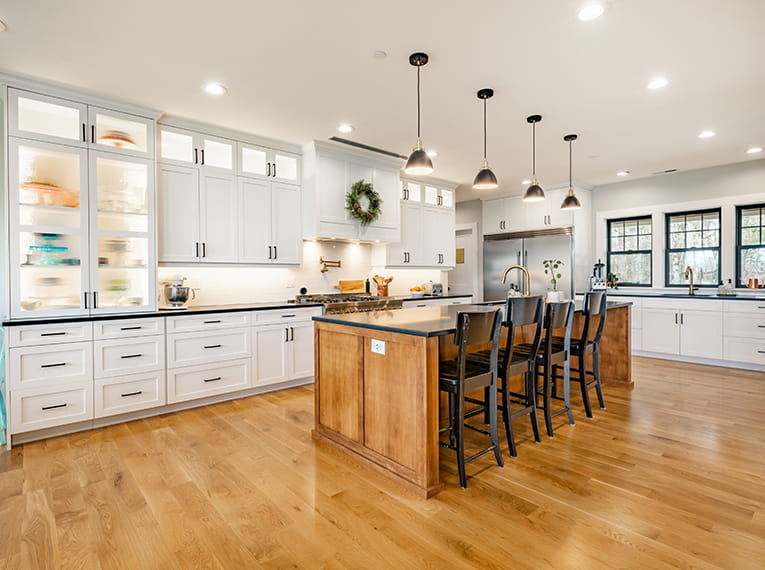
Hardwood flooring is familiar enough that most homeowners have heard plenty of advice about it. Some of that advice is useful. Other claims turn legitimate considerations about moisture, scratches or maintenance into rules that don’t apply equally to every floor or home.
For Ontario homeowners comparing flooring options, understanding the differences can make the decision much easier. The floor itself, its finish, the room where it’s installed and the way your household uses the space all matter.
These flooring facts can help separate common myths from the practical questions worth asking before you choose a floor.
Common Hardwood Flooring Myths and the Facts Behind Them
Broad statements about wood flooring often leave out important details. Products, finishes, installation conditions and daily use vary, so it’s better to look at what a particular floor will face in your home.
Myth: Hardwood Flooring Is Too Difficult to Maintain
Wood floors need care, but that doesn’t mean homeowners must constantly perform complicated maintenance.
Routine care depends on the floor and its finish. Keeping abrasive dirt and debris under control, addressing spills appropriately and following care instructions for the particular flooring can handle much of the day-to-day work.
More involved maintenance or refinishing is different from regular cleaning. How often that becomes relevant depends on the condition of the floor, household activity and the type of wear it receives.
Myth: Hardwood Floors Cannot Handle Everyday Wear
A busy household doesn’t automatically rule out wood flooring. At the same time, no responsible flooring choice should be presented as immune to scratches, dents or signs of use.
How wear appears can depend on the wood, surface texture, finish and activity in the space. Homes with children, pets or frequent foot traffic may also prioritize different characteristics than a lightly used room.
For example, at Revival Flooring, we often discuss textured surfaces as an option for active environments because everyday marks can blend more naturally into the overall appearance. That doesn’t make a floor damage-proof, but it illustrates why lifestyle should be part of the selection process.
Myth: Scratched Hardwood Flooring Has to Be Replaced
A visible scratch doesn’t automatically mean the entire floor has reached the end of its life.
The appropriate response depends on what was damaged, how deeply it was affected and the construction and condition of the flooring. Light surface wear is different from substantial damage to the wood itself.
Some suitable hardwood floors can be sanded and refinished, which may restore an existing floor rather than replacing it. Before assuming replacement is necessary, have the flooring assessed so you understand what options are realistic for that specific floor.
Myth: All Hardwood Flooring Is Basically the Same
Colour is often what catches your eye first, but wood floors can differ in far more than shade.
Species, grade, plank dimensions, construction, texture and finish can all influence how a floor looks and suits a project. Solid and engineered flooring also differ in construction, while new and reclaimed woods offer different visual characteristics.
A small sample can help you narrow your preferences, but it shouldn’t be the only basis for a decision. Consider the room, how it’s used and what you expect from the finished floor.
Myth: Hardwood Flooring and Moisture Never Mix
Moisture is a genuine consideration for wood, so this myth has a grain of truth buried inside an oversimplification.
Instead of assuming hardwood works everywhere or nowhere moisture could be present, look at the conditions of the specific room. The flooring construction, installation requirements and environmental conditions all need to be considered.
Product-specific guidance matters here. A flooring option suitable for one part of a home shouldn’t automatically be assumed appropriate for another simply because both products are made from wood.
Myth: Unfinished Hardwood Is Literally an Unfinished Floor
The terminology can be confusing. “Unfinished hardwood” describes flooring supplied without its final stain and protective finish already applied.
Finishing is still part of the overall project. With unfinished flooring, the boards can be installed and then sanded and finished on site, allowing decisions about elements such as colour and sheen to be made as part of the project.
Revival Flooring specializes in this approach. Because our flooring begins unfinished, customers can also choose different levels of involvement, from professional installation and finishing to purchasing the material for a DIY project.
Myth: You Should Choose Hardwood Based on Appearance Alone
A floor has to work in the room after the design decisions are finished.
Colour, grain and plank style deserve attention, but so do household activity, maintenance expectations, environmental conditions and installation requirements. A dramatic wide-plank floor may catch your attention immediately, while another option may better suit how a particular room is used.
One of the more useful homeowner tips is to define your practical priorities before becoming attached to a particular look. That gives you a clearer way to compare attractive options.
Questions to Ask When Choosing Hardwood Flooring
Before selecting a floor, bring the conversation back to your home and how you use it. Useful questions include:
- Where will the flooring be installed, and what conditions does that space experience?
- How much everyday traffic and wear should the floor accommodate?
- What care will the particular flooring and finish require?
- What installation and finishing work is involved?
- Which visual details matter most to the overall design?
- Is the flooring appropriate for the specific project rather than simply attractive in a sample?
General advice can help you prepare, but the final decision should be based on the actual product, room and installation.
Make Your Hardwood Flooring Choice Based on the Facts
Hardwood flooring decisions are better made around the characteristics of your home, the particular floor and the demands of the project than around sweeping myths. Asking about installation, finishing, care and suitability gives you a stronger basis for comparing your options.
At Revival Flooring, we specialize in customizable unfinished hardwood flooring and help customers consider both the appearance they want and the practical requirements of their space.
Reach out to Revival Flooring today at 705-990-0548, email us at revivalflooring@gmail.com or click here to get in touch online.
FAQs
Is Hardwood Flooring Hard to Keep Clean?
Not necessarily. Cleaning requirements depend on the particular flooring and finish, so there isn’t one routine that applies to every wood floor.
Regular cleaning is also different from refinishing or other restoration work. Follow the care guidance appropriate to your flooring rather than assuming intensive maintenance is always required.
Does Hardwood Flooring Always Scratch?
Wood can develop scratches and other signs of wear, but how visible or extensive they become varies. Household activity, the finish, maintenance and abrasive debris can all affect how a floor ages.
Rather than looking for a promise of scratch-proof flooring, consider how different flooring and finishing choices may suit the level of activity in your home.
What Is the Difference Between Finished and Unfinished Hardwood Flooring?
Unfinished flooring is supplied without its final finish already applied, so sanding and finishing form part of the flooring project. Other flooring products may arrive with the finish applied before installation.
When comparing the two approaches, consider the installation and finishing process as well as the appearance you want from the completed floor.
What Should Homeowners Consider Before Choosing Hardwood Flooring?
Consider the intended room, household activity, desired appearance, maintenance expectations and project requirements.
The best comparison is based on the actual environment where the flooring will be installed. Understanding the specific product you’re considering is more useful than relying on a broad assumption about all hardwood floors.
